
How did Kiln first get involved with Vinted, and what was the brief when they came to you?
We first connected with Vinted at the end of 2023 through a former colleague who suggested they reach out to Kiln. At the time, Vinted had spoken to several agencies, but their ask was unusual: they wanted their internal creative team and an external agency to work side by side.
Not every agency was keen on that setup — it meant embedding directly with Vinted’s team in Vilnius for a month. But that was something we were able to offer.
So I flew over to Lithuania and worked in-house with their creative team to kick off the first stage of the process.
When Vinted came to you, what problem were they trying to solve through the rebrand?
Like many rebrands, it started with competition. Vinted is hugely successful, but that also meant a wave of copycats across Europe — some with identities that looked uncomfortably close to Vinted’s, especially in terms of color. Vinted were also expanding into broader categories, such as electronics and high value fashion, so they needed an identity that had the flexibility to speak to different audiences that were interested in a wider selection of items.
At the same time, they had launched an internal brand platform called “New Again.” This wasn’t just a tagline — it was meant to guide campaigns and larger creative work. The visual identity needed to catch up and bring that platform to life.
So our job was twofold: differentiate Vinted from lookalike competitors, and make sure the identity embodied the spirit of New Again.

Vinted' Previous Identity

Image courtesy by Studio Kiln
What was your first impression of Vinted as a brand before the project?
In the UK, Vinted is a hugely popular product — most people know the app, have bought or sold something on it. But the brand itself was relatively quiet compared to the platform. It didn’t have much presence beyond the product.
So when we started working together, it felt like this was the first major piece of brand work Vinted had really invested in. They’d done visual identity projects before, but with the launch of New Again, there was finally a chance to align brand and platform. For the first time, the team could really dig into what made Vinted tick from the inside out.

Image courtesy by Studio Kiln

Image courtesy by Studio Kiln
The handwritten logo has been with Vinted since 2018. Why keep it, and how did you build a new identity system around it?
Vinted’s handwritten logo had already been through a small redesign in 2020, so by the time we started working with them it was almost five years old and still going strong. From their perspective, the logo was untouchable — it carried real equity with their community, backed by plenty of user testing.
So our job wasn’t to reinvent it, but to ask: how do we make everything else feel cohesive around it? Before, individual brand assets looked a little disconnected. They didn’t feel like they were all singing from the same hymn sheet. The challenge was to build a unified visual identity system that could wrap around the logo and make the whole brand feel consistent.

Image courtesy by Studio Kiln
Color has always been central to Vinted’s identity. How did you approach refining the palette, and what role does the new darker teal play?
Color was a huge part of Vinted’s look — but also something competitors had started to copy. Their signature teal, called Calypso, was widely used, so the challenge was to keep its essence while giving it more maturity, usability, and distinctiveness. The darker hue we landed on actually existed in their palette already, but we elevated it and made it a hero.
We also introduced a fresh mint for UI purposes (the mint was for brand not just for ui), while simplifying the rest of the palette. By stripping things back, the brand could have more contrast, more moments of “pop,” without losing what people already associated with Vinted.
The goal wasn’t for users to suddenly notice a dramatic shift — it was to feel like the brand had been subtly elevated. For employees who had been with Vinted for years, these refinements felt right, familiar, and sensitive to the brand’s roots. It wasn’t about starting over, but about carefully evolving what already worked.

Image courtesy by Studio Kiln
What was it like collaborating with Vinted’s internal team on a rebrand of this scale?
With a company the size of Vinted — thousands of employees and multiple layers of stakeholders — you’re bound to meet some resistance. Not everyone is automatically on board with a rebrand. A big part of Kiln’s role was to guide people through the process, showing why incremental changes mattered and how they fit into the bigger picture.
The way we kept alignment was by always tying decisions back to the original brief and to Vinted’s wider “New Again” strategy. That framework had already gained strong buy-in internally, which gave us a shared anchor. So while there were challenges in bringing everyone along, the internal team was receptive and genuinely excited to see the brand evolve.

Image courtesy by Studio Kiln
Vinted is both a scrappy community marketplace and a global unicorn. How did you balance keeping it approachable while giving it global polish?
Part of our role was to push things further than Vinted’s team might expect — even to the point of making them uncomfortable. Early check-ins could be scary for them. But that tension was important. It let us test where their comfort levels really sat and where we could stretch the identity.
This was a long process — nearly a year — where pieces of the puzzle slowly fell into place. The key was not letting things slip back into the familiar. If you don’t push expectations, a brand just reverts to what it’s always been, especially when internal teams have been working with the same assets for years.
One breakthrough moment came when we landed on a new typeface. We partnered with a foundry in California (Very Cool Studio) that had this sans serif which felt accessible, warm, and human — not cold or hyper-modern, but relatable. Once we had that, it anchored the identity and helped everything else start to sit into place.
"If you don’t push expectations, a brand just reverts to what it’s always been."

Image courtesy by Studio Kiln
Second-hand fashion carries values like sustainability and community. How did you translate those ideas into the identity beyond just visuals?
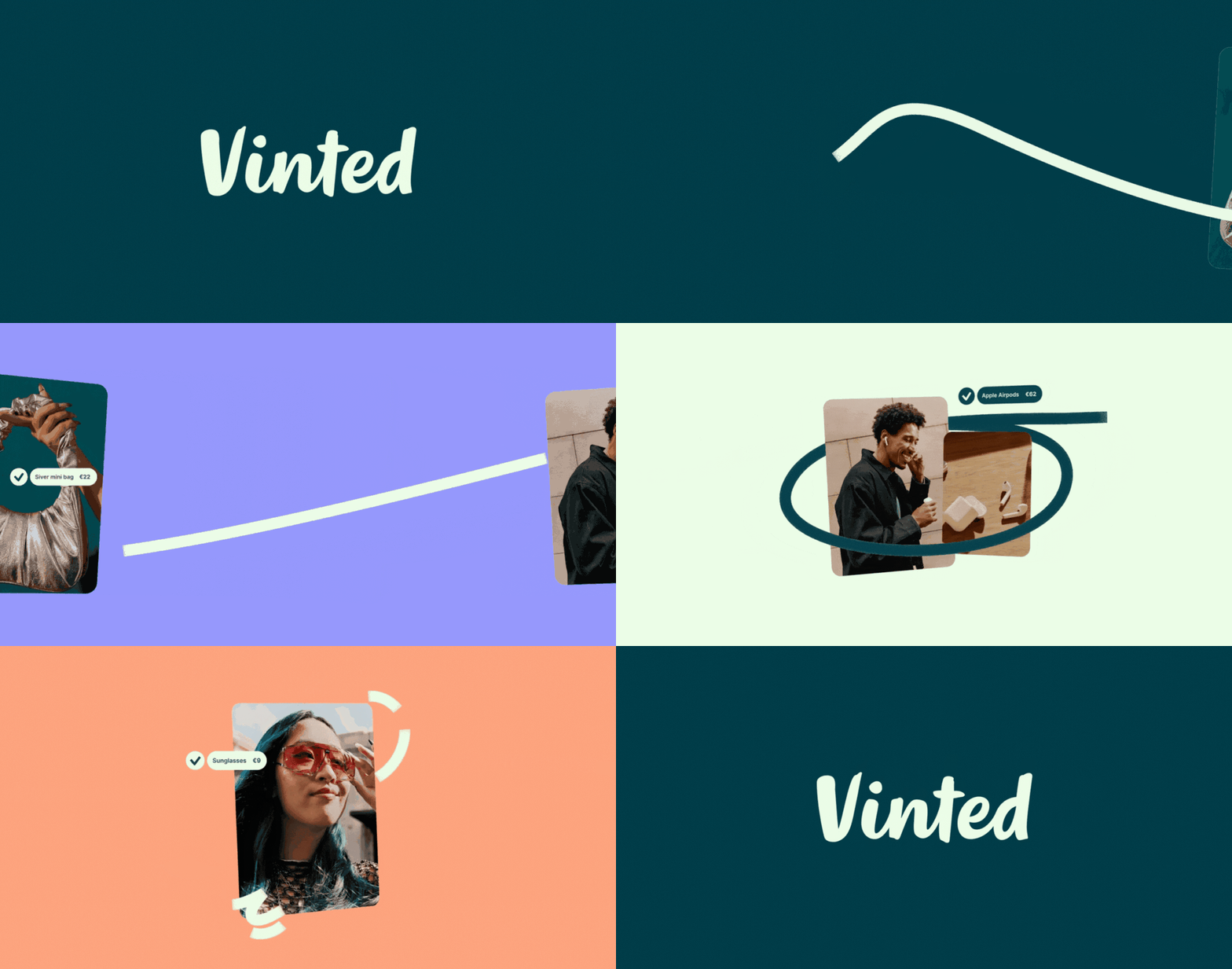
From Kiln’s perspective, the goal was to embed those values into the system itself, not just decorate the brand with them. We unraveled the logo and created a flowing line that became a metaphor for the user journey on Vinted.
That line could circle an item you wanted to buy, or link one user to another — echoing the back-and-forth of marketplace conversations. Eventually it bursts out in moments of celebration: “I’ve got my item,” “I’ve sold mine,” “I’ve made some extra cash.”
The line was intentionally a little rough, because second-hand is never about perfect polish — it’s about real people and real exchanges. That balance of warmth, community, and imperfection was essential to making the identity feel alive and true to Vinted.

Image courtesy by Studio Kiln
If you had to pin it down, what’s the one thing about the Vinted rebrand you’re most proud of?
There are lots. When we got the project, Kiln was still a relatively young studio. To be trusted with such a large branding brief so early was humbling and exciting. But the thing I’m most proud of is how we integrated with Vinted’s internal team — making friends, navigating stakeholders, and ultimately helping deliver a brand identity that feels cohesive, contemporary, and aligned with Vinted’s ambitions. Getting through those hurdles to reach that point felt like a huge win.
I’m also proud to see the brand slowly come to life in the real world. Kiln has always believed in ‘Lifeful Design’ – that design only becomes real when people interact with it. Now that Vinted is rolling out the identity, we’re seeing it appear on products, in social posts, and across their ecosystem. It’ll be a gradual rollout, but seeing a company of this scale — with thousands of employees and millions of users — start to live and enjoy the work we did together is incredibly rewarding.

Image courtesy by Studio Kiln
"Design only becomes real when people interact with it — seeing millions of users start to live the brand is incredibly rewarding."
When people look back at Vinted’s brand evolution years from now, what’s the mark you hope Kiln’s work leaves on it?
For me, it’s twofold. On one hand, I want people to look at the work and see quality — to recognize what Kiln can offer. But from a user’s perspective, I almost want the opposite: for it to feel like nothing has changed.
It’s that moment when you look back at old logos and think, “Oh, I didn’t even realize it changed.” That’s the kind of subtlety we wanted with Vinted — where the identity evolves without alienating the people who love it. Their attachment just grows naturally over time.
A lot of rebrands aim to grab attention or make a big splash. This wasn’t about that. It was about a quiet refresh that makes the brand stronger, more cohesive, and ultimately puts a smile on people’s faces. If that’s the reaction, I think we’ve done our job.